
Vulnerable adult laws in cannabis regulation are legal protections designed to prevent exploitation, coercion, and inappropriate access to marijuana products for individuals who may be unable to make fully informed decisions about cannabis use due to age, cognitive impairment, disability, or dependence on caregivers. These safeguards sit at the intersection of patient rights and consumer protection, ensuring that as states expand adult-use legal frameworks the most at-risk populations aren’t left unprotected.
The stakes are significant. Legal cannabis markets have introduced unprecedented access to potent products, from high-THC concentrates to edibles that can be easily concealed or administered without consent. For older adults with dementia, individuals with intellectual disabilities, or those in assisted living facilities, this access creates genuine risks. But protection must be calibrated carefully. Overly broad restrictions can strip autonomy from people who have every right to make their own medical and recreational choices.
As of 2026, no uniform federal standard governs how states should protect vulnerable populations within cannabis programs. Instead, we see a patchwork of approaches: some states have embedded protections directly into dispensary licensing requirements, others rely on existing elder abuse statutes, and several have created cannabis-specific caregiver registration systems with built-in oversight mechanisms. The variation reflects an ongoing tension between expanding access and preventing harm.
This article breaks down how vulnerable adult protections actually function in legal cannabis markets, the categories of safeguards currently in use, and what advocates, caregivers, and industry professionals need to know about balancing protection with personal freedom. Understanding these frameworks is essential for anyone involved in cannabis policy, patient advocacy, or care for at-risk populations.
What Vulnerable Adult Protections Mean for Cannabis Policy
In cannabis regulation, a vulnerable adult is someone whose age, mental state, or physical condition makes them susceptible to exploitation, undue influence, or harm in commercial transactions. This typically includes individuals with diagnosed cognitive impairments like dementia or Alzheimer’s, adults under guardianship or conservatorship, residents of long-term care facilities, and people with documented developmental disabilities. The designation isn’t about general competence, it addresses specific situations where someone might struggle to make fully informed decisions about purchasing cannabis products or could be manipulated by others seeking to exploit their access.
Cannabis laws address these populations because legal marketplaces create new opportunities for exploitation that didn’t exist during prohibition. When cannabis was entirely illegal, the risks were different, street transactions, criminal penalties, uncertain product quality. Now that states have created regulated markets with licensed dispensaries and tracked inventory, policymakers must consider how those systems protect people who might not fully understand product potency, can’t recognize deceptive sales tactics, or are being coerced by caregivers or family members to make purchases on their behalf. Understanding how regulations work reveals why vulnerable adult protections have become standard components of state cannabis frameworks.
- Vulnerable Adult
- A person whose physical or mental condition, age, or dependent status makes them susceptible to harm, exploitation, or coercion in commercial settings, requiring specific regulatory protections.
- Exploitation
- The illegal or improper use of a vulnerable person’s resources, access, or decision-making capacity for another’s profit or advantage, including forcing someone to purchase cannabis for others.
- Undue Influence
- Pressure, manipulation, or coercion that overcomes a vulnerable person’s free will in making decisions about cannabis purchases or use, often by caregivers or those in positions of trust.
- Capacity
- The legal and mental ability to understand the nature and consequences of a transaction, including risks, effects, and alternatives, the standard dispensaries may assess before completing sales.
The intersection of consumer protection law and cannabis reform creates unique challenges. Traditional consumer protection statutes weren’t written with cannabis in mind, while cannabis regulations often focus on preventing diversion, underage access, and impaired driving rather than protecting vulnerable populations from financial or physical harm. States have had to build these protections intentionally, borrowing from elder abuse statutes, alcohol regulations, and healthcare consent frameworks to create safeguards that recognize cannabis as both a commercial product and a psychoactive substance requiring special handling.
Why single out vulnerable adults when cannabis is already restricted to adults 21 and over? The age limit addresses developmental concerns but doesn’t account for diminished capacity, dependency relationships, or institutional settings where power imbalances exist. A 75-year-old with advanced dementia faces different risks than a healthy 25-year-old, even though both are legally adults. The protections acknowledge this reality without removing vulnerable adults’ rights to access cannabis, they’re designed to ensure those transactions happen with informed consent and appropriate safeguards rather than through manipulation or coercion.
How Vulnerable Adult Protections Work in Cannabis Regulations

Point-of-Sale Protections
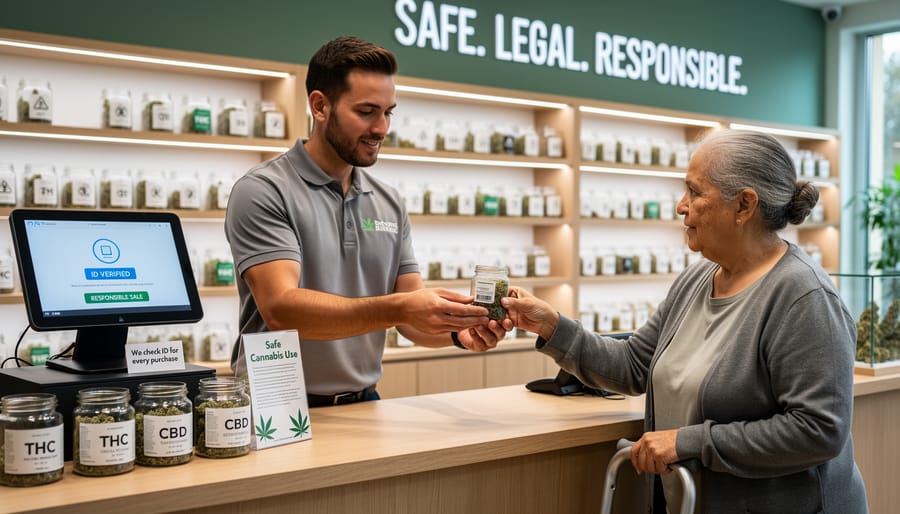
Dispensaries in adult-use markets operate under regulatory agency rules that require staff to recognize and respond appropriately when vulnerable adults attempt purchases. Most states mandate specific training for budtenders covering signs of diminished capacity, coercion, or exploitation. Staff learn to watch for indicators like confusion about product selection, inability to communicate preferences clearly, or the presence of an accompanying person who controls the transaction and payment while the customer remains passive.
When staff identify a potential vulnerable adult situation, standard protocols typically involve discreet managerial consultation rather than public confrontation. The budtender may ask simple verification questions to assess whether the customer understands what they’re purchasing and is making an independent choice. If concerns persist, managers can refuse the sale based on store policy, though they must document the reason and follow state-specific procedures.
Training programs also address the distinction between a vulnerable adult making an informed choice and one being exploited. A customer with a disability or cognitive difference who clearly states their preferences and controls their purchase presents differently from someone who appears confused, pressured, or unable to complete the transaction independently. Some jurisdictions require annual refresher training and written documentation of refusal incidents, creating an audit trail for regulators reviewing compliance. The protocols aim to prevent exploitation without denying access to adults who can legally purchase cannabis but may need accommodation or additional time to communicate their choices.
Caregiver and Guardian Frameworks
Most state cannabis regulations establish formal caregiver registration systems to govern purchases made on behalf of vulnerable adults. These frameworks require designated caregivers to register with the state medical marijuana program, submit to background checks, and carry state-issued identification cards that authorize them to purchase cannabis for specific patients. The caregiver-patient relationship must be documented through signed attestations or medical provider verification, creating an auditable chain of authorization.
Verification systems at point of sale require dispensary staff to confirm both the caregiver’s registration card and the patient’s medical documentation before completing transactions. Staff must verify that the caregiver is authorized for that specific patient, that purchase limits align with the patient’s medical recommendation, and that the products selected match any restrictions noted in the patient’s file. Many states limit caregivers to serving one to five patients simultaneously to prevent commercial diversion schemes disguised as caregiver relationships.
Purchase limits for caregivers typically mirror individual patient limits rather than allowing combined maximums, preventing stockpiling that could indicate exploitation. Some jurisdictions require caregivers to sign transaction logs or provide identification each time they purchase, creating records regulators can audit if exploitation concerns arise. States increasingly prohibit caregivers with certain criminal convictions, particularly financial crimes, elder abuse, or drug trafficking offenses, from registering, adding another protection layer against predatory relationships.
Reporting and Enforcement Mechanisms

Most states establish dual reporting systems where cannabis retailers and medical practitioners can flag suspected exploitation through confidential channels to both cannabis regulatory agencies and adult protective services. Dispensary staff typically receive training to recognize warning signs, unusual purchasing patterns, visible coercion, or cognitive impairment in transactions, and file reports without needing definitive proof of abuse.
Regulatory agencies investigate by reviewing transaction records, interviewing involved parties, and coordinating with local law enforcement when criminal conduct appears likely. Penalties range from license suspensions for retailers who fail mandatory reporting to criminal charges for caregivers or guardians exploiting vulnerable adults through fraudulent cannabis purchases.
The process balances confidentiality with transparency: reports remain protected to encourage disclosure, but substantiated cases may trigger public disciplinary action against licensed operators. In practice, many jurisdictions struggle with resource constraints and unclear jurisdictional boundaries between cannabis boards, health departments, and law enforcement, leading advocates to push for standardized protocols that ensure consistent protection across the supply chain.
Categories of Vulnerable Adult Protections in Cannabis Law
States have developed multiple overlapping frameworks to protect vulnerable adults in legal cannabis markets, reflecting different risk factors and protection philosophies. These categories often work together in practice, creating layered safeguards that address various forms of vulnerability without relying on a single definition.
Age-Based Enhanced Protections
Some jurisdictions establish specific protections for adults above certain age thresholds, typically 65 or 70. These provisions might require additional verification steps, impose transaction limits, or mandate enhanced record-keeping for sales to elderly customers. Colorado’s regulatory framework, for example, allows dispensaries to flag accounts for additional review when purchasing patterns suggest potential exploitation of older adults.
Cognitive and Capacity-Based Safeguards
Regulations addressing mental capacity create protocols for situations where a customer’s ability to make informed decisions appears compromised. These provisions don’t prohibit sales based on disability but instead require budtenders to assess whether someone understands what they’re purchasing. If a customer can’t articulate basic information about their purchase or seems confused about dosing, staff may be required to pause the transaction and offer assistance or suggest the person return with a caregiver.
Institutional and Residential Restrictions
Many states impose specific rules for cannabis access in institutional settings like nursing homes, assisted living facilities, and group homes for adults with disabilities. These restrictions typically prohibit on-site consumption without explicit facility approval and medical documentation, even in adult-use states. They also limit delivery to such facilities and require verification that residents have legal authority to possess cannabis independent of institutional permission.
Common Protection Categories
State laws typically organize vulnerable adult protections around these frameworks:
– Elderly-specific provisions targeting financial exploitation and undue influence in cannabis transactions
– Cognitive impairment considerations requiring capacity assessment without discriminating based on diagnosis
– Residential facility restrictions balancing institutional authority with resident autonomy rights
– Financial exploitation safeguards monitoring unusual purchase patterns or third-party payment arrangements
– Medical patient overlaps where vulnerability intersects with therapeutic use, requiring additional documentation
Undue Influence and Exploitation Standards
Several states have adopted provisions specifically targeting situations where someone may be coercing or manipulating a vulnerable adult into purchasing cannabis for the influencer’s benefit. These standards draw from elder abuse law, establishing red flags like repeated purchases by someone who appears uncomfortable, transactions conducted entirely by a companion, or patterns suggesting resale rather than personal use.
The specific combination of protections varies significantly by state, with some jurisdictions favoring broad discretion for dispensary staff while others implement rigid protocols with clear triggers and required actions.
Where Vulnerable Adult Laws Apply in Cannabis Markets
Vulnerable adult protections function differently across cannabis market contexts, shaped by how each state balances access with safeguards. In retail dispensaries, budtenders receive training to recognize signs of coercion, confusion, or impaired decision-making during transactions. Colorado’s regulations require staff to refuse sales when they observe a customer being directed or controlled by another person, while California mandates documentation of any transaction where capacity concerns arise. These point-of-sale protocols apply equally in medical and adult-use settings, though medical dispensaries often have additional consultation requirements.
Medical cannabis programs present unique applications because patients include individuals with cognitive impairments, dementia, or serious mental health conditions, populations vulnerable adult laws aim to protect. States like Illinois require healthcare providers to assess decision-making capacity before certifying patients with certain diagnoses, creating a clinical checkpoint before registry access. Patient-caregiver relationships in medical programs trigger verification protocols: Massachusetts requires notarized caregiver agreements and limits purchases to amounts consistent with the patient’s certified condition, preventing exploitation through over-purchasing.
Home delivery services face heightened scrutiny because transactions occur in private settings without the oversight present in retail locations. Oregon’s delivery regulations require drivers to verify that the person receiving the order is the registered customer and appears to be making independent decisions. Drivers must refuse delivery if someone other than the customer attempts to take possession or if the customer shows signs of confusion about the transaction. Washington prohibits delivery to assisted living facilities and nursing homes entirely, while other states require facility administrator approval for any cannabis delivery to institutional addresses.
Social consumption lounges, now operating in several states, implement ID verification systems that flag individuals with court-appointed guardians or conservators. Nevada’s lounge regulations require staff intervention if a patron appears disoriented or unable to manage their consumption independently, with protocols for contacting emergency contacts listed in membership records.
State variation reflects different philosophical approaches to consumer protections. Michigan takes a permissive stance, relying primarily on existing adult protective services rather than cannabis-specific restrictions, while New Jersey enacted detailed protocols requiring dispensaries to maintain relationships with social service agencies for referrals. These differences create challenges for multi-state operators implementing consistent compliance programs and for advocates seeking model policy frameworks that protect without over-restricting access rights.
Balancing Protection and Patient Access Rights
Vulnerable adult protections in cannabis law exist in constant tension with fundamental principles of patient autonomy and medical access. The most effective frameworks recognize that protection cannot mean blanket prohibition, adults with cognitive disabilities, mental health conditions, or age-related decline retain civil liberties and often have legitimate medical needs that cannabis addresses.
The core challenge lies in distinguishing genuine protection from paternalistic overreach. Some states have implemented capacity assessment requirements so restrictive that patients with mild cognitive impairment face effective bans, even when their physicians recommend cannabis for chronic pain or other conditions. Advocates point out that we don’t impose similar barriers on far more dangerous prescription medications, raising questions about whether these rules protect vulnerable adults or simply exclude them from legal markets.
Medical access presents the sharpest conflicts. A patient with early-stage dementia who has used cannabis successfully for years under medical supervision shouldn’t automatically lose access because a budtender decides they seem confused. Yet dispensaries need clear guidance on when a transaction raises legitimate concerns versus when staff are projecting ableist assumptions onto customers who communicate or process information differently.
Best-practice frameworks prioritize supported decision-making over substitute decision-making. Rather than requiring guardians to make all cannabis purchases, progressive regulations allow vulnerable adults to designate trusted supporters who assist without replacing their agency. Colorado’s caregiver verification system, for example, requires documentation but preserves the patient’s role in the decision.
Rights-respecting protections also recognize intersectionality. Older adults, people with disabilities, and those with mental health conditions aren’t monolithic groups. A 75-year-old with full capacity has different needs than someone with severe intellectual disability, and regulations that treat all “vulnerable adults” identically inevitably either under-protect some or over-restrict others.
The advocacy position isn’t that protections are unnecessary, exploitation and coercion are real risks. It’s that effective safeguards focus on the behavior we want to prevent (financial abuse, coerced purchasing, targeting of impaired individuals) rather than categorically restricting entire populations. Staff training, transaction monitoring, and robust complaint systems address exploitation without denying autonomy to millions who can make informed decisions about their own healthcare.
Common Questions About Vulnerable Adults and Cannabis Laws
Advocates, caregivers, dispensary staff, and policymakers frequently encounter confusion about how vulnerable adult protections operate within cannabis regulations. These questions reflect practical concerns about implementation, rights, and responsibilities.
Who qualifies as a vulnerable adult under cannabis laws?
Definitions vary by state, but typically include individuals with cognitive impairments, developmental disabilities, or mental health conditions that substantially limit their capacity to make informed decisions. Some jurisdictions also include adults over 65, individuals in care facilities, or those subject to guardianship.
Can someone with a legal guardian purchase cannabis?
It depends on the guardianship type and state law. Full guardianship typically prohibits direct purchases by the protected person, while limited guardianship may allow it if decision-making capacity for cannabis use is specifically retained. Guardians themselves may face restrictions on purchasing cannabis for their wards in some jurisdictions.
What should dispensaries do if they suspect financial exploitation?
Most states require budtenders to refuse the sale and document the incident. Many jurisdictions mandate reporting suspected exploitation to Adult Protective Services or designated regulatory agencies within 24 to 48 hours, similar to adult-use compliance protocols for other concerning transactions.
How do these protections affect medical cannabis patients?
Medical programs generally provide more flexibility than adult-use markets, but vulnerable adult safeguards still apply. Registered patients with documented conditions typically retain access rights even under guardianship, though caregivers may need additional verification to purchase on their behalf.
Clarifying these common concerns helps stakeholders navigate the intersection of consumer protection and cannabis access. Understanding that these frameworks aim to prevent harm without categorically denying rights enables more constructive policy discussions. Caregivers and advocates benefit from knowing when to seek legal counsel, particularly in cases where guardianship status or capacity questions arise in medical contexts where cannabis provides documented therapeutic benefit.
Evidence-based vulnerable adult protections represent a necessary component of comprehensive cannabis policy, but only when designed with precision and implemented with respect for individual rights. The challenge facing advocates and policymakers isn’t whether to protect at-risk populations, but how to do so without creating paternalistic systems that deny autonomy or medical access to those who retain decision-making capacity.
The most effective frameworks emerging from mature legal markets share common characteristics: clear definitions that don’t sweep broad populations under blanket restrictions, training programs that equip industry workers to recognize genuine exploitation rather than simply deny service based on age or disability, and enforcement mechanisms focused on bad actors rather than vulnerable individuals themselves. These systems acknowledge that protection and empowerment aren’t opposing goals.
As legalization continues expanding, the conversation around vulnerable adult laws will intensify. Advocates have both an opportunity and a responsibility to shape these discussions constructively. That means acknowledging legitimate concerns about exploitation while pushing back against overbroad restrictions that stigmatize entire populations. It means demanding transparency in how protection measures are enforced and insisting on data collection that reveals whether policies actually prevent harm or simply create new barriers.
The path forward requires rejecting false choices between access and protection. Cannabis policy can simultaneously expand adult-use rights and safeguard those genuinely at risk, but only if advocates remain engaged, critical, and committed to evidence over assumptions. The quality of vulnerable adult protections in the next generation of legalization will depend largely on whether reformers treat this as a compliance checkbox or a core equity issue deserving sustained attention.