Medical marijuana sits at the intersection of groundbreaking science and outdated policy, where decades of research now validate what patients have known for years: cannabis contains genuine therapeutic compounds that alleviate suffering. With 38 states legalizing medical cannabis and over 6 million Americans currently enrolled in state programs, this is no longer fringe medicine—it’s mainstream healthcare fighting for recognition.
The evidence is compelling. Clinical trials demonstrate that cannabinoids effectively manage chronic pain, reduce seizures in treatment-resistant epilepsy by up to 50%, and help cancer patients regain their appetite during chemotherapy. Yet misinformation persists, often rooted in prohibition-era propaganda rather than modern pharmacology. Patients report life-changing relief from conditions like multiple sclerosis, PTSD, and Crohn’s disease, but federal Schedule I classification still labels cannabis as having “no accepted medical use”—a classification that contradicts the FDA’s approval of four cannabis-based medications.
Understanding medical marijuana requires separating fact from fiction. This means examining peer-reviewed research, hearing directly from patients whose quality of life has transformed, and recognizing the legal complexities that leave many suffering individuals without access. Whether you’re a patient exploring treatment options, a healthcare provider navigating new therapeutics, or an advocate pushing for sensible reform, evidence-based knowledge becomes your most powerful tool. The science is clear, the testimonials are overwhelming, and the time for informed action is now.
The Science Behind Medical Marijuana: What Research Actually Shows
How Your Body Is Already Wired for Cannabis
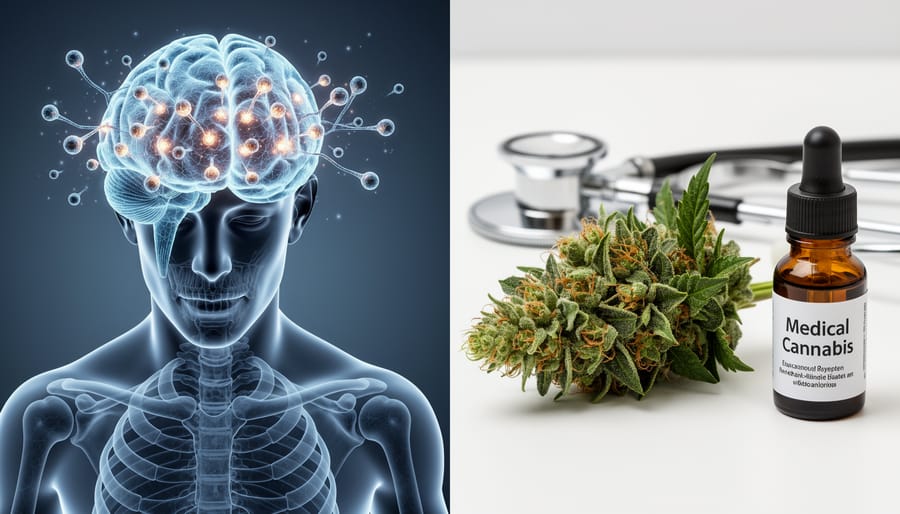
Here’s a fascinating fact that transforms the medical marijuana debate: your body was designed to respond to cannabis compounds long before anyone ever considered its medical potential. Scientists discovered this in the 1990s when they identified the endocannabinoid system, a vast network of receptors throughout your brain, organs, immune system, and connective tissues.
This system exists in every person, whether you’ve ever used cannabis or not. Your body naturally produces its own cannabinoid-like molecules called endocannabinoids, which regulate essential functions like pain perception, mood, appetite, memory, and immune response. Think of these receptors as locks, and cannabinoids as keys that fit perfectly into them.
When someone uses medical marijuana, compounds like THC and CBD interact with these same receptors. THC primarily binds to CB1 receptors concentrated in the brain and nervous system, which explains its effects on pain and nausea. CBD works more indirectly, influencing multiple receptor types and explaining its anti-inflammatory and anti-anxiety properties without producing a high.
Dr. Raphael Mechoulam, who discovered THC, explained it this way: the endocannabinoid system is involved in essentially all human disease. This isn’t alternative medicine or pseudoscience, it’s basic human biology confirmed by thousands of peer-reviewed studies.
Understanding this system reveals why dismissing medical marijuana as merely recreational ignores fundamental physiology. When patients report relief from seizures, chronic pain, or chemotherapy side effects, they’re describing predictable interactions with a system evolution built into every human body. The medical effects aren’t accidental; they’re biological reality.
What Decades of Research Have Uncovered
The scientific evidence supporting medical marijuana has grown exponentially over the past three decades. Research institutions worldwide have conducted thousands of studies examining cannabis compounds, particularly THC and CBD, and their therapeutic potential across various conditions.
A landmark 2017 report from the National Academies of Sciences, Engineering, and Medicine analyzed over 10,000 scientific abstracts, concluding with substantial evidence that cannabis effectively treats chronic pain in adults. The researchers found conclusive proof that cannabinoids reduce chemotherapy-induced nausea and vomiting, and improve multiple sclerosis-related muscle spasticity.
Dr. Sunil Aggarwal, a palliative care physician and cannabis researcher, explains that “decades of clinical observation have demonstrated what many patients already knew: cannabis provides relief where conventional treatments often fail.” His perspective reflects a growing consensus among medical professionals who have witnessed firsthand the therapeutic benefits.
Neurological conditions have emerged as particularly promising areas of study. Research published in leading medical journals shows cannabinoids may reduce seizure frequency in treatment-resistant epilepsy patients, with some experiencing dramatic improvements in quality of life. Studies examining inflammatory conditions, anxiety disorders, and sleep disturbances continue revealing cannabis’s complex therapeutic mechanisms.
The research hasn’t just confirmed efficacy but has also established safety profiles. Multiple systematic reviews indicate that when used responsibly under medical supervision, cannabis presents fewer risks than many conventional pharmaceuticals, particularly regarding overdose potential and long-term organ damage. This growing body of evidence has fundamentally shifted the conversation from whether medical marijuana works to how we can optimize its therapeutic applications while ensuring patient access.
Proven Medical Conditions That Respond to Cannabis Treatment
Chronic Pain: The Alternative to Opioids
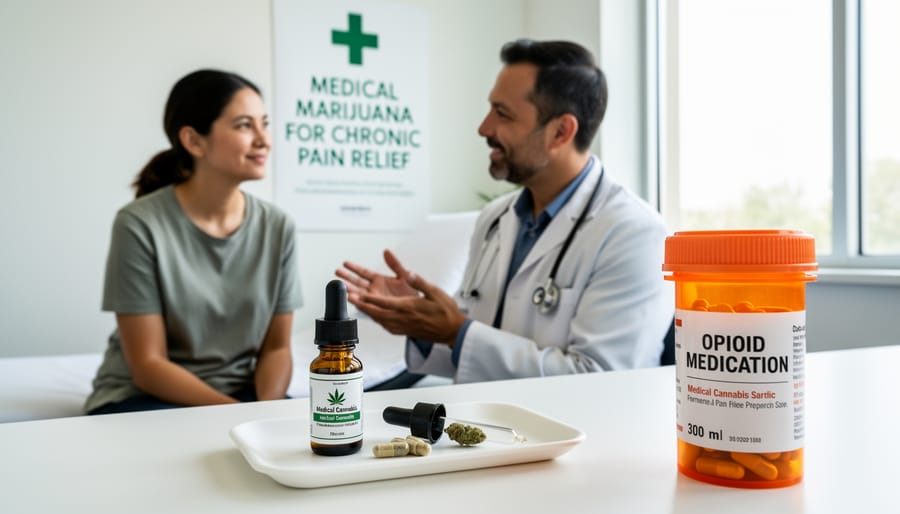
Chronic pain affects over 50 million Americans, and for too long, opioids remained the default prescription despite their devastating addictive potential. Medical marijuana is changing this narrative. Research demonstrates that cannabis effectively manages chronic pain conditions including arthritis, fibromyalgia, and neuropathy, with significantly lower addiction risk than traditional opioids.
A landmark study published in the Journal of Pain found that states with medical marijuana programs experienced a 25% reduction in opioid overdose deaths. This correlation isn’t coincidental. Cannabinoids interact with the body’s endocannabinoid system to modulate pain signals naturally, offering relief without the respiratory depression that makes opioids deadly.
Dr. Kevin Hill, an addiction psychiatrist at Harvard Medical School, explains that medical marijuana provides “a harm reduction approach” for pain management. Patients report improved quality of life, better sleep, and reduced reliance on pharmaceuticals with harsh side effects.
The evidence is compelling: in states where medical marijuana is legal, opioid prescriptions have dropped by up to 14%. For policymakers weighing reform, this represents not just individual healing but a public health solution to the opioid crisis. Medical marijuana offers hope where conventional medicine has often failed.
Epilepsy and Seizure Disorders
Medical marijuana has emerged as a breakthrough treatment for epilepsy, particularly for children with severe, treatment-resistant forms of the condition. Cannabidiol (CBD), a non-intoxicating compound found in cannabis, has demonstrated remarkable effectiveness in reducing seizure frequency where conventional medications have failed.
The turning point came with Epidiolex, the first FDA-approved CBD medication for treating Dravet syndrome and Lennox-Gastaut syndrome, two devastating childhood epilepsy disorders. Clinical trials showed that CBD reduced seizure frequency by more than 50% in many patients, with some experiencing complete seizure freedom.
Charlotte Figi’s story captured national attention when her parents discovered that high-CBD cannabis dramatically reduced her seizures from 300 per week to just a few per month. Her experience, along with countless others, sparked renewed research into cannabis-based epilepsy treatments.
Dr. Orrin Devinsky, a leading epilepsy researcher at NYU Langone Health, notes that CBD offers hope where traditional treatments fall short. For families exhausted by unsuccessful pharmaceutical options and debilitating side effects, medical marijuana has provided not just seizure control, but improved quality of life, cognitive function, and developmental progress. These documented outcomes continue strengthening the case for expanded medical marijuana access and research funding.
Mental Health Applications: PTSD, Anxiety, and Depression
Mental health applications represent some of the most promising yet complex areas of medical marijuana research. For PTSD, preliminary studies suggest cannabis may help reduce nightmares and improve sleep quality in veterans and trauma survivors. Dr. Sue Sisley, a leading PTSD researcher, notes that “many patients report significant symptom relief when conventional treatments have failed.” However, the relationship between cannabis and anxiety disorders requires careful consideration. While low-dose THC or CBD-dominant strains may reduce anxiety for some patients, higher THC concentrations can paradoxically trigger or worsen anxiety symptoms in others.
Depression presents similar nuances. Some individuals experience mood elevation and renewed engagement with daily activities, yet evidence remains mixed regarding long-term efficacy. Mental health professionals emphasize the importance of medical supervision, proper strain selection, and integration with therapy rather than cannabis as a standalone treatment. The endocannabinoid system’s role in emotional regulation offers compelling theoretical support, but patients with severe mental illness, particularly those with psychosis risk factors, should approach cannabis use cautiously. These applications demonstrate both marijuana’s therapeutic potential and the critical need for personalized, medically-guided treatment approaches that acknowledge individual differences in response and underlying conditions.
Debunking Common Myths About Medical Marijuana
The Gateway Drug Myth
The “gateway drug” narrative has dominated anti-cannabis rhetoric for decades, yet comprehensive research reveals a far different story. The theory suggests that marijuana use inevitably leads to harder drug experimentation, but statistical evidence consistently shows this represents correlation, not causation.
The National Institute on Drug Abuse acknowledges that while most people who use marijuana don’t progress to other drugs, some individuals who use multiple substances often tried cannabis first—simply because it’s more widely available. This distinction matters enormously for policy makers evaluating medical marijuana programs.
Dr. Yasmin Hurd, neuroscience researcher at Mount Sinai, explains that “the gateway hypothesis confuses sequence with consequence.” Her research demonstrates that environmental factors, socioeconomic circumstances, and mental health conditions predict substance abuse patterns far more reliably than marijuana use alone.
States with established medical marijuana programs provide compelling real-world data. A 2019 RAND Corporation study found no evidence that medical cannabis access increases hard drug use among adults. Colorado’s experience since legalization shows teen marijuana use remaining stable while opioid prescriptions dropped significantly.
The gateway myth has historically justified harsh criminalization policies that disproportionately harmed communities of color while blocking legitimate medical research. Understanding this distinction between correlation and causation empowers advocates to challenge outdated narratives with scientific accuracy, creating space for evidence-based policy reform that prioritizes patient access and public health.
Addiction and Dependency: Separating Fact from Fear
Understanding marijuana’s addiction potential requires honest comparison with other substances. According to the National Institute on Drug Abuse, approximately 9% of marijuana users develop dependence, significantly lower than alcohol (23%), cocaine (17%), or heroin (23%). Even prescription opioids carry higher dependency risks than cannabis.
Medical marijuana patients rarely exhibit the severe withdrawal symptoms associated with opioid or benzodiazepine discontinuation. When cannabis dependency does occur, symptoms typically include irritability, sleep difficulties, and mild anxiety—manageable without medical intervention. Dr. Carl Hart, neuroscientist at Columbia University, notes that most people who use marijuana do so without developing problematic patterns.
The real story here isn’t that marijuana carries no risks, but that its addiction profile is considerably milder than many legal substances already prescribed daily. Prescription painkillers claim thousands of lives annually through overdose, while no fatal marijuana overdose has been documented. This context matters when evaluating medical cannabis as an alternative treatment.
Responsible medical marijuana programs include patient education, dosage guidelines, and monitoring protocols that further minimize dependency risks. The fear-based narrative surrounding cannabis addiction often ignores these safeguards while overlooking the documented harms of pharmaceutical alternatives, perpetuating stigma rather than promoting informed healthcare decisions.
Safety Profile Compared to Conventional Medications
Medical marijuana presents a remarkably favorable safety profile when compared to many conventional pharmaceuticals. According to the National Academy of Sciences, cannabis has never caused a fatal overdose in documented medical history—a stark contrast to prescription opioids, which claimed over 80,000 American lives in 2021 alone. Dr. Peter Grinspoon, a Harvard Medical School instructor, notes that “cannabis is considerably safer than many medications prescribed daily for similar conditions.”
Common side effects of medical cannabis include dry mouth, dizziness, and temporary cognitive effects, which typically resolve quickly and are manageable. Compare this to conventional pain medications: NSAIDs cause approximately 16,500 deaths annually from gastrointestinal bleeding, while benzodiazepines carry addiction risks and dangerous withdrawal symptoms. Regarding long-term safety, studies show medical cannabis users don’t face the organ damage concerns associated with prolonged opioid or NSAID use.
The therapeutic window—the gap between effective and harmful doses—is extraordinarily wide for cannabis. While no medication is without risks, particularly for developing brains or those with certain psychiatric conditions, the comparative data strongly supports medical marijuana as a lower-risk alternative for many patients managing chronic conditions. This evidence challenges outdated stigmas and supports informed treatment decisions.
Real Patient Stories: Medical Marijuana in Action
Behind the statistics and clinical trials are real people whose lives have been fundamentally changed by accessing medical marijuana. These stories illuminate the human dimension of cannabis reform and demonstrate why evidence-based policy matters.
Sarah Mitchell, a 34-year-old elementary school teacher from Colorado, spent years navigating debilitating migraines that forced her to miss an average of eight work days monthly. After exhausting conventional treatments including prescription medications that left her cognitively impaired, she tried medical marijuana under her doctor’s supervision. “Within three months, my migraine frequency dropped by 70 percent,” Sarah explains. “I can be present for my students again, and I’m not spending my weekends recovering in a dark room.” Her experience aligns with research showing cannabis effectiveness for neuropathic pain and headache disorders.
Marcus Thompson’s story represents another compelling case. The 58-year-old veteran struggled with PTSD and chronic pain from combat injuries sustained during his military service. Traditional pharmaceutical approaches left him dependent on opioids and increasingly isolated. “Medical cannabis gave me my life back,” Marcus shares. “I’ve been opioid-free for two years, my sleep has improved dramatically, and I can participate in family activities again.” Studies confirm that many veterans report significant symptom relief and reduced pharmaceutical dependence when using medical marijuana for PTSD and pain management.
Fifteen-year-old Emma Rodriguez faced a particularly heartbreaking situation. Her treatment-resistant epilepsy caused multiple daily seizures that prevented normal childhood experiences. After her family relocated to a state with medical marijuana access, Emma began using a high-CBD cannabis formulation. Her seizure frequency decreased by 80 percent within six months. “Watching my daughter ride a bike for the first time at age 14 was indescribable,” her mother recalls. Clinical evidence increasingly supports cannabinoid therapy for pediatric epilepsy, particularly for conditions like Dravet syndrome.
These narratives underscore an essential truth: medical marijuana represents more than policy debate. For countless patients, it means reclaiming independence, reducing suffering, and experiencing life-changing improvements in daily functioning. While individual experiences vary and medical supervision remains crucial, these stories demonstrate why expanding access through thoughtful, evidence-based reform matters profoundly to real families navigating serious health challenges.
The Current Legal Landscape and Access Barriers
Medical marijuana exists in a contradictory legal framework that creates significant obstacles for patients who could benefit from this treatment. While 38 states and the District of Columbia have legalized medical cannabis in some form, the federal government continues to classify marijuana as a Schedule I controlled substance—the same category as heroin—asserting it has no accepted medical use and high abuse potential. This disconnect creates a patchwork of regulations that varies dramatically depending on where you live.
The practical consequences of this legal contradiction extend far beyond bureaucratic inconvenience. Patients in states with medical marijuana programs face numerous access barriers that begin with the approval process itself. Many qualifying conditions lists are restrictive, requiring documentation that some physicians remain reluctant to provide due to federal prohibition concerns. Even when patients obtain medical marijuana cards, they often discover their insurance won’t cover cannabis treatments because federal law prevents companies from reimbursing Schedule I substances.
Cost barriers present another significant challenge. Without insurance coverage, patients must pay out-of-pocket for consultations, card fees, and the medicine itself—expenses that can exceed hundreds of dollars monthly. For individuals managing chronic conditions on fixed incomes or disability benefits, these costs place effective treatment frustratingly out of reach.
Geographic disparities compound these issues. Rural patients may live hours from the nearest dispensary, while others reside in states without any medical marijuana program. This creates profound healthcare inequity, where your zip code determines whether you can access a treatment that might dramatically improve your quality of life.
These systemic barriers have galvanized advocacy efforts pushing for comprehensive reform. Organizations representing patients, healthcare providers, and social justice advocates are working toward federal rescheduling or descheduling of cannabis, which would resolve the legal contradictions hampering research and access. Stories of patients forced to relocate to access medicine, or worse, turned toward potentially dangerous alternatives, underscore why this reform isn’t just policy debate—it’s about fundamental healthcare access and human dignity.
What Healthcare Providers Are Learning
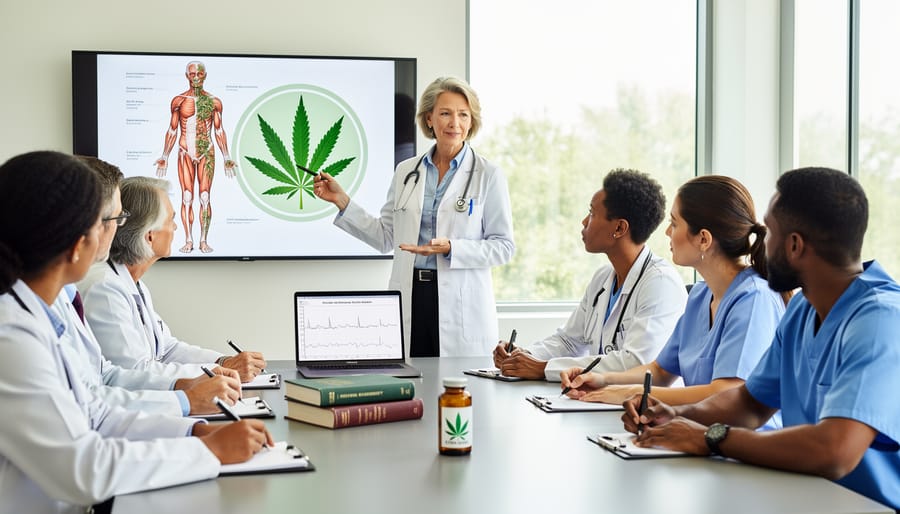
The medical community’s relationship with cannabis is experiencing a profound transformation. After decades of prohibition that created knowledge gaps in medical education, healthcare providers are now navigating uncharted territory as they incorporate medical marijuana into patient care.
Dr. Sarah Martinez, a family medicine physician in Colorado, represents this shift. “When I finished medical school in 2010, we had maybe one hour devoted to cannabis,” she explains. “Now I’m certifying patients weekly and learning alongside them about dosing, delivery methods, and drug interactions. It’s humbling, but the patient outcomes make it worthwhile.”
This educational gap remains a significant challenge. Most practicing physicians received minimal or no training on the endocannabinoid system or cannabis therapeutics. Progressive medical schools are beginning to address this deficit, with institutions like Harvard Medical School and the University of California system now offering continuing education courses specifically focused on medical cannabis.
Nurses have emerged as particularly important advocates and educators within healthcare systems. “We’re often the ones patients trust with their questions about cannabis,” says Michael Thompson, a registered nurse in Massachusetts. “We’re seeing real relief for patients with chronic pain who were previously on dangerous opioid regimens.”
Healthcare systems in states with established programs are developing clinical best practices, though standardization remains challenging. Many institutions now have cannabis consultation services, helping providers navigate recommendations responsibly. The emphasis has shifted from whether to recommend cannabis to how to do so safely and effectively.
This evolution reflects a broader acknowledgment: when healthcare providers approach medical marijuana with the same rigor applied to conventional treatments, patients benefit from a valuable therapeutic option previously denied them.
The evidence is clear: medical marijuana offers legitimate therapeutic benefits for millions of patients worldwide. From managing chronic pain and reducing seizures to alleviating PTSD symptoms and improving quality of life for cancer patients, the scientific foundation supporting cannabis as medicine continues to strengthen. Yet despite mounting research and documented patient success stories, a troubling disconnect persists between what we know and how our policies respond.
This gap isn’t just bureaucratic inconvenience—it has real consequences. Patients who could benefit from medical marijuana face barriers ranging from legal uncertainties to limited access and social stigma. Meanwhile, researchers encounter obstacles that slow the very studies needed to expand our understanding of cannabis therapeutics.
The path forward requires collective action. If you’re a healthcare provider, educate yourself about medical marijuana’s potential role in patient care. If you’re a voter, support legislation that expands research funding and patient access. Share accurate information with friends and family to combat persistent myths and misconceptions. For those managing qualifying conditions, consider having an informed conversation with your doctor about whether medical marijuana might be appropriate for your treatment plan.
Change happens when informed citizens demand it. By understanding the facts, recognizing the evidence, and advocating for sensible policies, you become part of a movement toward compassionate, science-based healthcare. The question isn’t whether medical marijuana works—the evidence speaks for itself. The question is whether we’ll let outdated policies continue preventing patients from accessing treatments that could transform their lives.